
European Regulation on Delivery Packaging in Catering

Regulations on materials that come into contact with food
In the food service industry, particularly when it comes to meal delivery, food packaging is crucial both for food safety and compliance with legal standards. In Europe, strict regulations govern the materials and methods used to package food to ensure they do not compromise the quality of the dishes or consumers' health.
Materials that come into contact with food: what the regulations say
Under Regulation (EC) No 1935/2004, materials intended to come into contact with food must be safe and must not transfer harmful substances to food. This legislation applies to all materials, whether made of plastic, paper, glass or metal, and requires that they do not alter food's organoleptic properties (taste, smell, texture).
In this context, staples should not be used in contact with food. No legislation specifically prohibits them, but they are a foreign object: if a staple comes loose and ends up in a dish, it can cause injury, accidental ingestion and contamination. As such, controlling this risk falls under the HACCP requirements of Regulation (EC) No 852/2004 and the general principle of food safety set out in Regulation (EC) No 178/2002.
Sealing delivery packaging
Meal delivery is common practice, and using suitable packaging is essential. Restaurants must ensure that the methods used to seal packaging are safe and traceable: secure closure systems, snug-fitting lids or adhesive seals.
By contrast, closing a delivery bag with a staple is strongly discouraged: this method introduces a foreign object that could come into contact with food and provides no tamper evidence. If a foreign object is found, the establishment may be held liable following a health inspection or a complaint. Food service professionals should therefore opt for compliant and traceable methods.

Alternatives for sealing delivery packaging
To ensure food deliveries are efficient and safe, several alternatives to staples can be considered:
- Linerless (or liner-free) adhesive paper: compatible with kitchen receipt printers, this paper has no glassine backing and resists moisture and heat. It seals the order like a tamper-evident strip while displaying the dish and your brand.
- Standard adhesive tape: easy to use, but time-consuming to apply by hand.
- Self-sealing bags or boxes: built-in flaps or tabs seal them without accessories.
- Reusable clips certified for food contact: practical for flexible packaging, provided they are certified for food use.
- Food-grade elastic bands: simple and reusable, suitable for bags and some boxes.
These alternatives protect food during transport and make kitchen logistics easier.
Conclusion
Complying with European food packaging standards is essential to protect consumers' safety and ensure meal quality. Rather than using staples, which are foreign objects and provide no tamper evidence, restaurants should adopt safe, traceable solutions for sealing their delivery packaging.
Food service and delivery
Linerless seals for your bags
Printed in the kitchen with the order ticket, without a staple.
-
Linerless thermal labels 40 x 100 x 25 mm - 83 m, repositionable adhesive (boxes of 96 rolls)
8.96€ / roll860.16€ per carton of 96 rolls
-
Linerless thermal labels 40 x 80 x 25 mm - 44 m, repositionable adhesive (24-roll carton)
7.35€ / roll264.60€ per carton of 36 rolls
-
TSi · Made in France
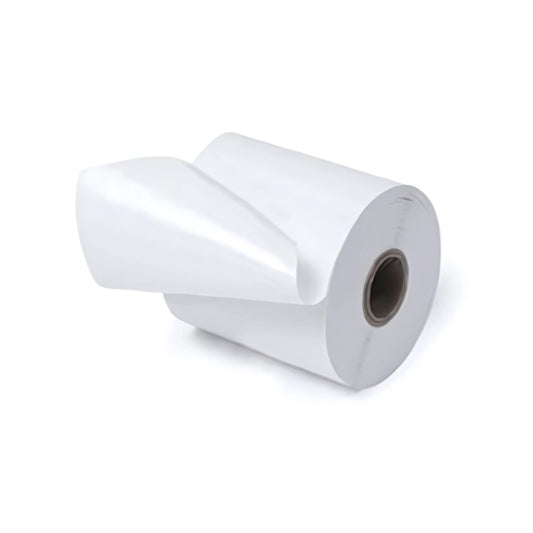
Thermal linerless labels 58 x 90 x 40 mm - 55 m, repositionable adhesive (box of 18 rolls)
9.99€ / roll179.82€ per carton of 18 rolls
-
TSi · Made in France
Thermal linerless labels 58 x 80 x 25 mm - 50 m, repositionable adhesive (box of 18 rolls)
9.21€ / roll165.82€ per carton of 18 rolls

Test a roll before ordering a case
Individual samples from €8.90, one per product reference. Check the size, adhesive, and how they run through your printer.